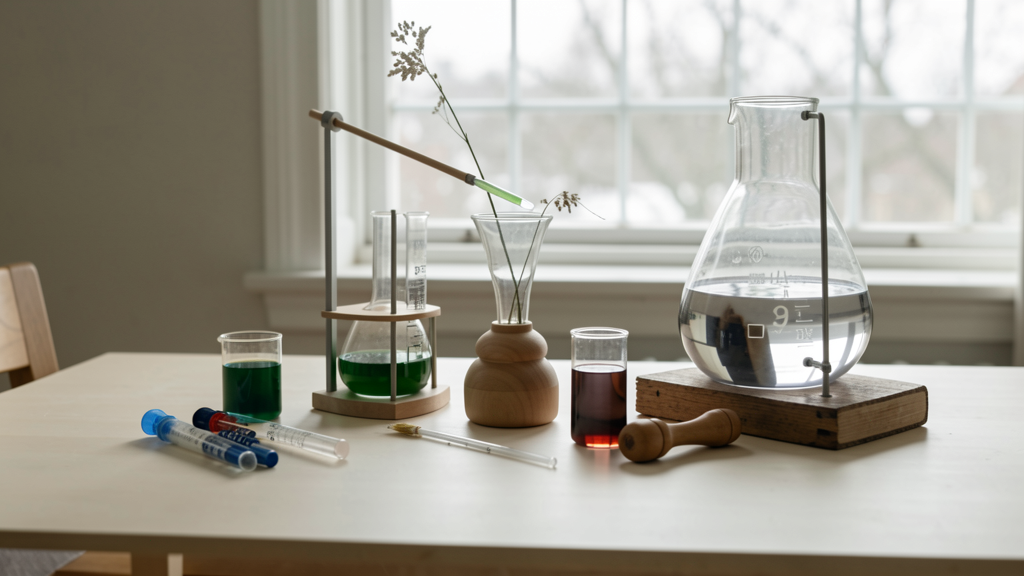
The Unwashed Dishes That Cured Sepsis
Discover how Alexander Fleming's notorious lack of laboratory hygiene led to the isolation of penicillin and created a protocol for validating scientific accidents.

In September 1928, Alexander Fleming returned from a two-week holiday to his laboratory at St. Mary's Hospital in London. What he found—or rather, what he failed to clean up before leaving—would restructure modern medicine. Most scientific breakthroughs are painted as the result of rigorous, linear adherence to the scientific method. This one was different. It was a triumph of disorder.
I have spent years analyzing innovation protocols, and the Fleming case remains the definitive example of how a "lazy" cleaning routine, paired with high-level observational skills, can override a standard operating procedure. The story is not just about luck; it is about the specific friction between a mistake and the rigorous validation required to transform that mistake into a life-saving reality.
The Protocol of Pile-Up
Fleming’s laboratory was famously chaotic. His reputation for untidiness was not a charming quirk but a habitual deviation from sterile discipline. Before leaving for his holiday in late August, he had been working with Staphylococcus aureus cultures. In a sterile, well-managed lab, these dishes would have been autoclaved to kill the bacteria and then washed for reuse.
Fleming stacked these cultures in a basin of lysol, a disinfectant, intending to clean them upon his return. It was a half-measure. By submerging them in disinfectant but not sterilizing them immediately, he created a unique environmental variable. The stack was deep, and the disinfectant likely failed to penetrate the deeper dishes before it evaporated or lost efficacy.
When he walked back into the lab on September 3, 1928, he began sorting through the pile. Before discarding them, he did something that defied the logic of a busy researcher: he inspected each dish individually. He was looking for specific patterns of contamination or bacterial degradation. It was a tedious, unnecessary step for a cleanup job.
That was the first divergence point. A strict adherence to a "clean as you go" protocol would have destroyed the sample before it could speak. The "laziness" of leaving the pile, combined with the compulsion to inspect trash, created the conditions for the anomaly.
The Halo Effect and the Departure from Logic
One specific dish caught his eye. The Staphylococcus colonies were thriving in most areas, but around a large mold contaminant, the bacteria had completely lysed. There was a clear, circular zone of inhibition—a "halo" where the staph bacteria could not survive.
A standard technician sees mold on a petri dish and sees a failed experiment. Fleming saw a biological weapon. He did not simply wash the dish and move on. He took a photograph of it—which still exists today—and isolated the mold for further study. He identified it as a member of the Penicillium genus, specifically Penicillium notatum.
Here is where the narrative often skips a crucial step. The discovery of the mold is the "accident," but the realization that the mold was secreting an active antibacterial substance was an act of profound scientific intuition. Fleming had to distinguish between the bacteria simply failing to grow near a competitor (a common biological occurrence) and a chemical diffusing from the mold that actively destroyed the pathogen.
He ran a confirmatory experiment that is often overlooked in the folklore. He grew the mold in a broth, filtered out the spores and mycelium, and applied the resulting "mold juice" to other bacteria. It worked. This moved the event from a curiosity to a verifiable phenomenon. However, the substance was unstable. It degraded in days when exposed to heat or the wrong pH.
This instability is why the discovery sat on the shelf for over a decade. Fleming could not isolate the active ingredient in a stable, usable form. He published his findings in 1929 in the British Journal of Experimental Pathology, and the paper was largely ignored. The scientific community saw a fascinating parlor trick, not a pharmaceutical cure. The accident had been observed, but the validation was incomplete.

The Rigorous Rescue: Validating the Accident
The "lazy" discovery might have remained a footnote if not for the Oxford University team of Howard Florey and Ernst Chain in the late 1930s. They took Fleming’s unstable "mold juice" and applied the rigorous chemical engineering required to turn it into a drug. This is the stage of the process that interests me most as an innovation lead: how we institutionalize the validation of accidents.
Florey and Chain did not just replicate Fleming's results. They escalated them. By 1940, they had enough purified penicillin to conduct the first animal trials. They infected eight mice with lethal doses of Streptococcus and treated four with penicillin. The untreated mice died within hours; the treated mice survived.
This was the "evidence of mechanism" that the world required. It moved the concept from "interesting biological interaction" to "potential therapeutic agent." But the validation required more than just mice; it required a terrifying logistical trade-off. The yield of penicillin from mold surface cultures was abysmal. To treat a single human patient, they needed to process thousands of liters of mold culture.
The first human trial, in 1941, involved a policeman named Albert Alexander who was dying of sepsis from a scratch. He started recovering almost immediately after the injections began. However, they ran out of the drug. The patient relapsed and died. It was a brutal validation: the mechanism worked perfectly, but the supply chain failed. This is the reality of scientific translation. The "lazy" discovery was sound, but the application required a massive, non-lazy industrial effort.
The Trade-Off Between Cleanliness and Discovery
This case presents a counter-intuitive problem for modern lab management. We optimize for efficiency and sterility. We implement 5S methodologies and rigorous clean-up protocols. And we should; safety is paramount. But in doing so, do we eliminate the space for serendipity?
The danger of hyper-optimized protocols is that they often lack the bandwidth for the "unplanned observation." If Fleming had followed a strict autoclave-immediately protocol, the Penicillium spore—likely drifting up from the mycology lab downstairs—would never have had the time to germinate and secrete its juice while the staph bacteria were still present.
To turn an accident into a breakthrough, a system needs three things that Fleming possessed:
- Situational Awareness: The ability to recognize an anomaly rather than dismiss it as error.
- ** Intellectual Curiosity:** The willingness to investigate a contaminant rather than sterilize it.
- ** Documentation:** The discipline to photograph and culture the anomaly rather than just washing it down the sink.
Innovation is rarely a straight line. As we look at the study of cosmic rays or particle physics, we see similar themes. Detecting these invisible forces often requires building an environment where they can reveal themselves, much like Fleming needed the petri dish to sit undisturbed. If you want to understand how to build a simple apparatus to visualize the invisible tracks of cosmic particles in your own home, you can follow this guide on building a cloud chamber. It is the same principle: create the medium, wait for the interference, and observe the result.
The Cost of a Missing Mistake
Consider the alternative history. If the lab technician on duty before Fleming's holiday had been diligent, if they had cleared the basin, if they had sterilized the stacks immediately, we would have lost penicillin. Perhaps someone else would have discovered it later, but we cannot rely on that.
Before antibiotics, a simple scratch could lead to fatal sepsis. Plagues and infections have historically shaped political systems and populations more than wars, shifting borders and toppling dynasties through sheer biological attrition. The discovery of penicillin didn't just save individuals; it stabilized societies.
However, there is a caveat we must acknowledge. For every Fleming, there are thousands of researchers whose "lazy" protocols just resulted in moldy, useless data. Embracing disorder is not a strategy for consistent success. It is a high-variance approach. The difference is in the filtering mechanism. Fleming was able to filter the noise from the signal instantly.
Most modern labs are designed to minimize noise, which is excellent for reproducibility but terrible for outliers. We have traded the potential for accidental discovery for the safety of consistent results. This is a necessary trade-off for drug development safety, but it leaves a gap in early-stage discovery research.
A Protocol for Controlled Chaos
We cannot teach "laziness," but we can teach the method of validating deviation. If you are managing a team or running experiments, create a "deviation log." Do not just discard failed experiments or contaminated plates. If you see something that "shouldn't" be there, document it before you clean it.
Fleming’s genius was not in being messy. It was in realizing that the mess had a structure. The "lazy" routine bought him the time; his intellect provided the validation.
The real takeaway for 2026 is not to stop cleaning your lab. It is to pause before you discard the "failed" iteration. In the gap between the mistake and the trash can, that is where the next sepsis cure—or the next innovation in your field—is likely hiding. The breakthrough was not the mold; it was the decision to look at it twice.
Read next
Left Brain vs. Right Brain: Why the Creativity Myth Is Scientifically Dead
Discover why the 'logical' or 'creative' brain labels are scientifically invalid excuses that limit your potential.

Mortality vs. Leverage: 5 Plagues That Rewired Political Power
Why the death toll of a pandemic matters less than the economic scarcity it creates for toppling regimes.