
5 Animals That Don't Just Use Tools, But Actually Manufacture Them
Discover the five species that blur the line between instinct and engineering by physically modifying objects to create functional tools.

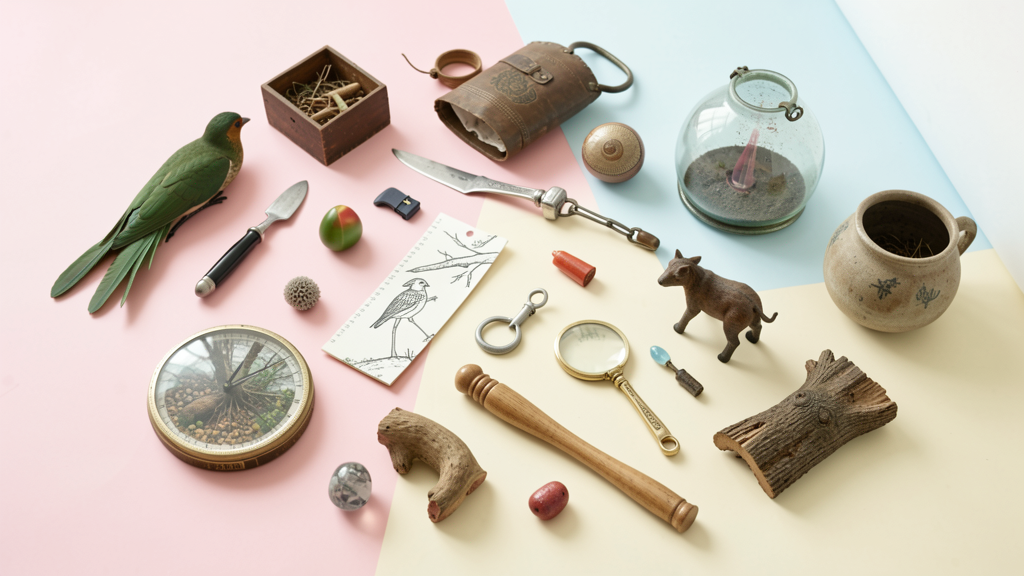
For decades, we defined humanity by the tools we created. The narrative was simple: animals use objects; humans make them. This binary distinction crumbled under the weight of empirical evidence, yet we still cling to a subtle hierarchy in our understanding of zoology. There is a profound cognitive distance between a chimpanzee picking up a rock to crack a nut and a crow carefully trimming a twig to create a hook.
The latter involves foresight, an understanding of material properties, and an intent to modify an object for a future purpose. This is not merely opportunism; it is manufacturing. As we analyze behavioral data accumulated through 2026, the line between instinctual behaviors and engineering becomes increasingly blurred. We are looking at species that do not just interact with their environment but curate it, subtracting material from a branch, assembling disparate parts, or physically altering the state of an object to suit a specific mechanical need.
The psychological leap required here is massive. To manufacture a tool, the animal must hold a mental template of the finished product before it exists. They must perceive the potential within a raw material, much like a sculptor sees a statue in a block of marble. Just as we often misclassify fungi because of their appearance rather than their biology, we have historically underestimated the cognitive complexity of these behaviors because they do not resemble our own factories.
Here are five species that have crossed the threshold from usage to fabrication.
New Caledonian Crows: The Hook Architects
The Corvus moneduloides, native to New Caledonia, is the undisputed champion of avian engineering. While many animals use sticks, these crows craft hooks. In a famous series of observations that began in the early 2000s and have been rigorously replicated since, researchers observed these birds selecting particular species of thorny plants. They do not simply break off a branch; they snip a forked twig, then meticulously strip the leaves, creating a smooth, curved tool.
The precision suggests a deep understanding of mechanics. The crows often hold the twig against a perch with their feet to pull the strip, applying tension to ensure a clean break. In controlled laboratory settings, such as those observed by the University of Auckland, a captive crow named Betty stunned the scientific community by bending a straight piece of wire into a hook to retrieve a bucket of food—completely unprompted. This was not trial and error; she seemed to visualize the solution instantly.
This behavior challenges our understanding of "insight" in non-human animals. The crows are not modifying sticks randomly; they are optimizing the tool for the task. The hook allows them to reach into crevices that a straight probe cannot access, extracting insects and larvae with high efficiency. It is a deliberate alteration of an object's geometry to solve a specific physical problem.
Veined Octopuses: The Portable Shelter Architects
The octopus is a master of camouflage and escape, but the Veined Octopus (Amphioctopus marginatus) adds a unique behavior to its repertoire: the assembly of mobile homes. Unlike other cephalopods that might simply hide under a rock, this octopus gathers coconut shells discarded by humans. They are not merely using debris; they are preparing a transportable fortress.
The process is methodical. The octopus selects a half-shell, jets water over it to clean it, and then carries it across the seafloor. The awkward part is the transport—the octopus stacks the shells and carries them using its suckers, walking stiffly on the tips of its arms in a "stilt walk." When threatened, it stops, assembles the two halves to form a sphere, and hides inside.
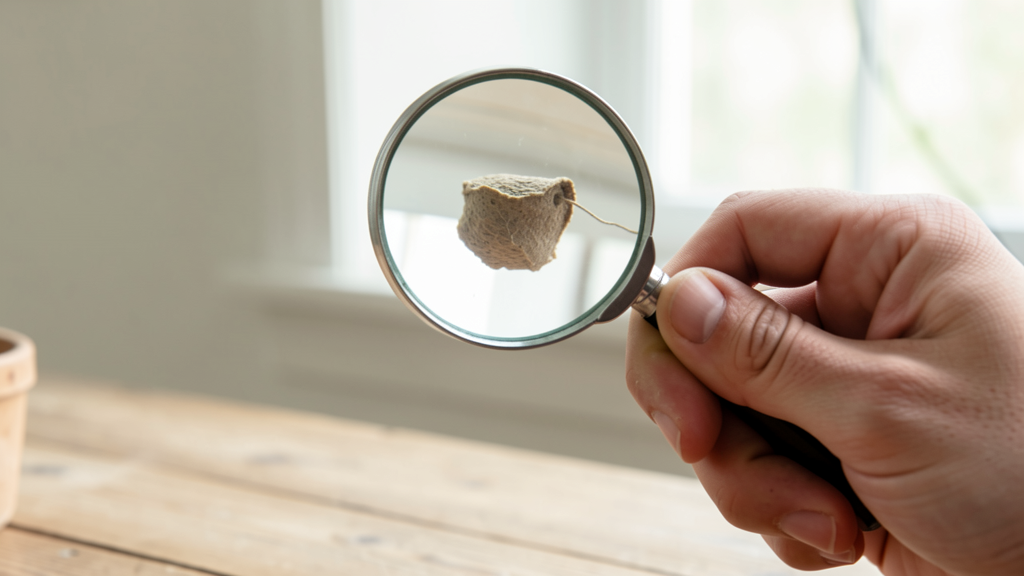
This is manufacturing in the sense of assembling components. The octopus creates a protective structure that did not exist in that configuration before. Biologists have noted that this implies planning for the future; the animal is carrying a burden for immediate protection later, a trade-off between speed and safety. It is a rare example of tool use that involves the transport of heavy objects for later assembly, paralleling the nomadic lifestyle of early humans.
Fongoli Chimpanzees: The Weapon Smiths
While standard chimpanzee populations are known for termite fishing—where they strip leaves from twigs to create fishing probes—the Fongoli chimpanzees of Senegal engage in a more violent and sophisticated form of manufacture. They sharpen sticks into spears to hunt bushbabies (galagos) hiding in tree hollows.
The distinction here is the modification for a lethal purpose. The chimp breaks a branch, strips it of leaves and side-shoots, and then uses its teeth to sharpen the tip into a distinct point. This is subtractive manufacturing. They are not just making a probe; they are creating a weapon. Jill Pruetz, who first documented this behavior in 2007, noted that this is largely a female-led activity, contrasting with the male-dominated hunting seen in other chimp communities.
The Fongoli chimps then forcefully jab the spear into the hollow trunks to injure or kill the sleeping prey. The creation of a sharpened point alters the tool's physics, allowing it to penetrate flesh and wood. This level of foresight—modifying an object to function as an extension of the body for offense—places these apes in a distinct category of tool users. It shows an understanding of cause and effect that goes beyond simple extraction to complex predation strategies.
Woodpecker Finches: The Selective Engineers
The Woodpecker Finch (Camarhynchus pallidus) of the Galápagos Islands is a classic example of a bird that uses cactus spines to probe for insects. However, the nuance lies in the selection and modification. The finch does not grab any available thorn; it often breaks the spine off the cactus plant to the desired length, testing it against the tree bark.
If the spine is too blunt or too short, the finch will discard it and select a new one. In some instances, they have been observed modifying the spine by holding it in the beak and pecking it against a branch to shorten or sharpen it. This is a crude but effective form of tool manufacture.
The finch does not have the dexterity of the crow or the strength of the chimp, but it demonstrates a remarkable grasp of material utility. The spine is an extension of the beak, allowing the bird to reach larvae in deep crevices that its beak cannot access. The active modification of the spine's length shows an awareness of the specific depth of the target. It is a behavior driven by the constraints of its anatomy, solved through the physical alteration of environmental resources.
Bolas Spiders: The Chemical Ballisticians
While insects are often ruled by instinct, the Bolas Spider (Mastophora genus) exhibits a behavior so complex it borders on engineering. Rather than weaving a passive web, this spider manufactures a single, sticky tool: a bola. It constructs a line of silk with a sticky droplet at the end, which it swings at passing moths.
The manufacturing process involves creating the adhesive droplet, which is not just simple glue but a cocktail of chemicals that mimics the pheromones of specific female moths. The spider effectively engineers a chemical lure attached to a mechanical device. When a male moth approaches, attracted by the synthesized scent, the spider swings the bola with great precision to snag the moth out of the air.
This is the convergence of chemical engineering and mechanics. The spider must produce the correct pheromone blend for the moth species active that night and spin the silk with the correct elasticity for the swing. Unlike a static web, the bola is an active, handheld tool that requires the spider to calculate the trajectory of the prey in real-time. It is a highly specialized, manufactured tool that integrates chemistry and physics.
The Cognitive Horizon
The study of these species forces us to reconsider the definition of technology. In our own history, the leap from using unmodified stones to creating hand-axes marked a massive cognitive expansion. When we look at the Fongoli chimpanzee sharpening a spear or the New Caledonian crow bending wire, we are witnessing that same expansion in real-time.
We are no longer observing the accidental utility of an object; we are witnessing the intent to change the world. These animals demonstrate that the foundation of engineering is not an opposable thumb or a massive neocortex, but the ability to see a problem in the environment and visualize a modified solution. Whether it is an octopus carrying a shell or a spider synthesizing a lure, the common thread is the transformation of raw material into purposeful technology.
The evidence suggests that the impulse to manufacture is deeply rooted in the tree of life, appearing whenever survival demands it. As we continue to refine our methods of observation, stripping away our anthropocentric biases, we may find that the factory floor is not solely a human invention, but a universal biological imperative.
Read next
If Mushrooms Aren't Plants, Why Do We Still Put Them in the Salad Aisle?
Discover why the grocery store defies scientific taxonomy by shelving fungi with vegetables, and what this reveals about the clash between biology and human habit.

Crocodile vs. Alligator: Which is the True Apex Predator of the River?
By analyzing salinity tolerance and bite force mechanics, we determine which reptilian giant truly commands the waterways.